At the time of writing, Suntory Museum of Art in Midtown, Roppongi is exhibiting Utagawa Hiroshige’s One Hundred Views of Edo and Famous Views of Sixty-odd Provinces (collection of Japanese businessman Hara Yasusaburo). These two series, almost all in superb condition, are being exhibited in their entirety which must be a rare occurrence.
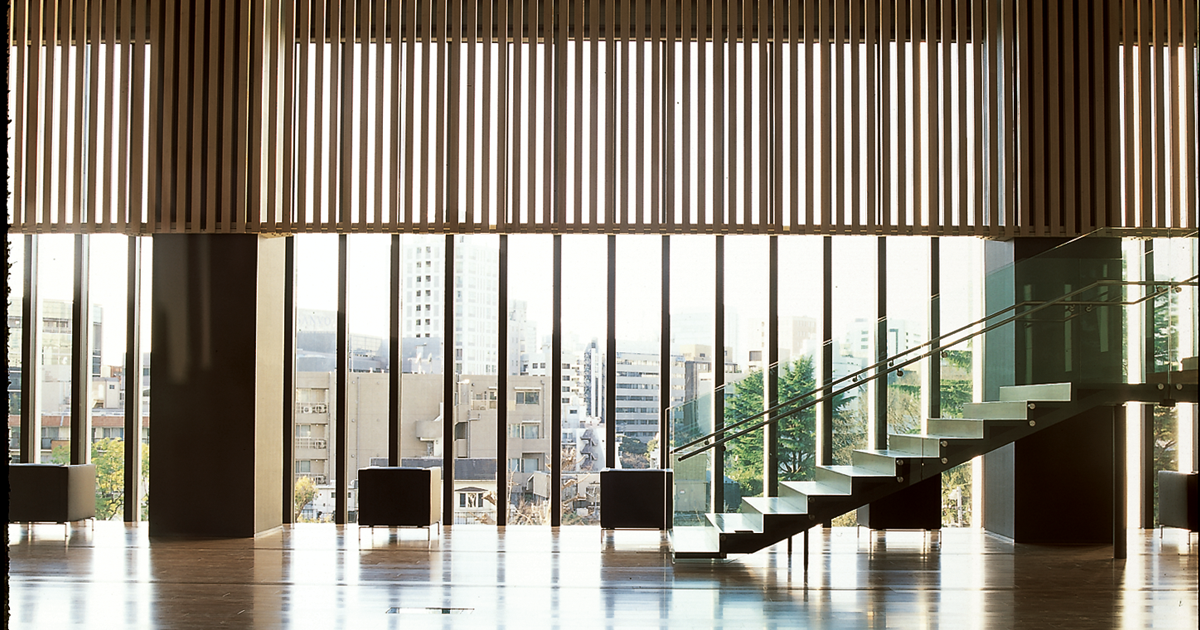
First briefly on Suntory Museum of Art, which deserve an article on its own and one day I hope to return to, is a mid-sized museum on the 3rd and 4th floors of Tokyo Midtown Galleria. The museum is designed by Kengo Kuma in modern Japanese aesthetics (read a lot of light beech wood in hush and dim lighting). Presentations are centered on special exhibits with no permanent exhibition although it is said to have a collection of 3,000 works of Japanese painting, lacquerware, textiles and other arts. On premise are a cafe, tea ceremony room and a small but fantastic museum store abound with classical Japanese everyday goods, stationary and original collection incorporating the special exhibition motifs. Museum store can be accessed by public through the 3rd floor and is fascinating to browse on its own right for souvenirs.
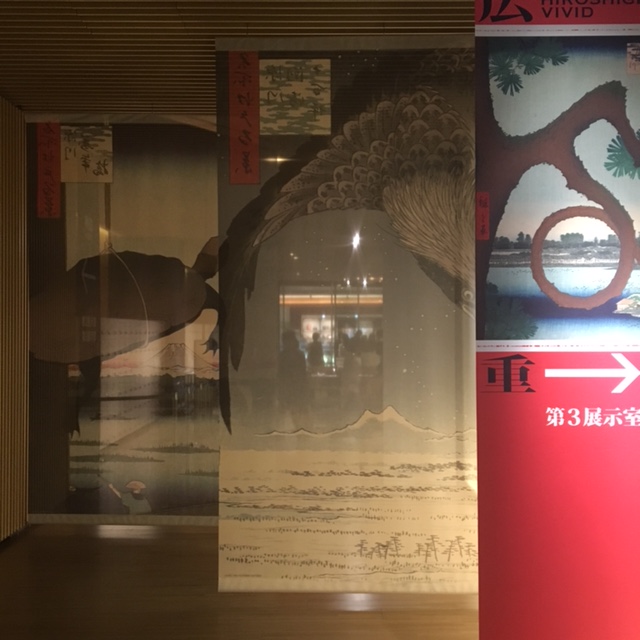
Back to Utagawa Hiroshige (歌川 広重, also Andō Hiroshige: 安藤 広重;
1797 – 1858). Hiroshige, a ukiyo-e artist and considered the last great master of that tradition, is best known for his landscapes, such as this series in exhibition One Hundred Views of Edo and Famous Views of Sixty-odd Provinces. Typically ukiyo-e genre (the term ukiyo-e 浮世絵 translates as ‘pictures of the floating world’) is associated with beautiful women, popular actors, sumo wrestlers and scenes from history and folk tales of urban pleasure in the Edo period (17th through 19th century) but Hiroshige’s work leans heavily to the natural – land and seascapes, birds and flowers.

I’m mesmerized at colour separation in the prints through gentle ink seepage. Where deep magenta sky fades to pale pink and the ground changes colour from myrtle to indigo, I’m lost in The Plum Garden in Kamiedo. Vantage point into The Plum Garden is typically Hiroshige in which one peers into the distant landscape framed by an everyday Japanese object in the foreground like circular window, bridge planks and, in this case, plum tree. Van Gogh copy painted a few works of Hiroshige including The Plum Garden.

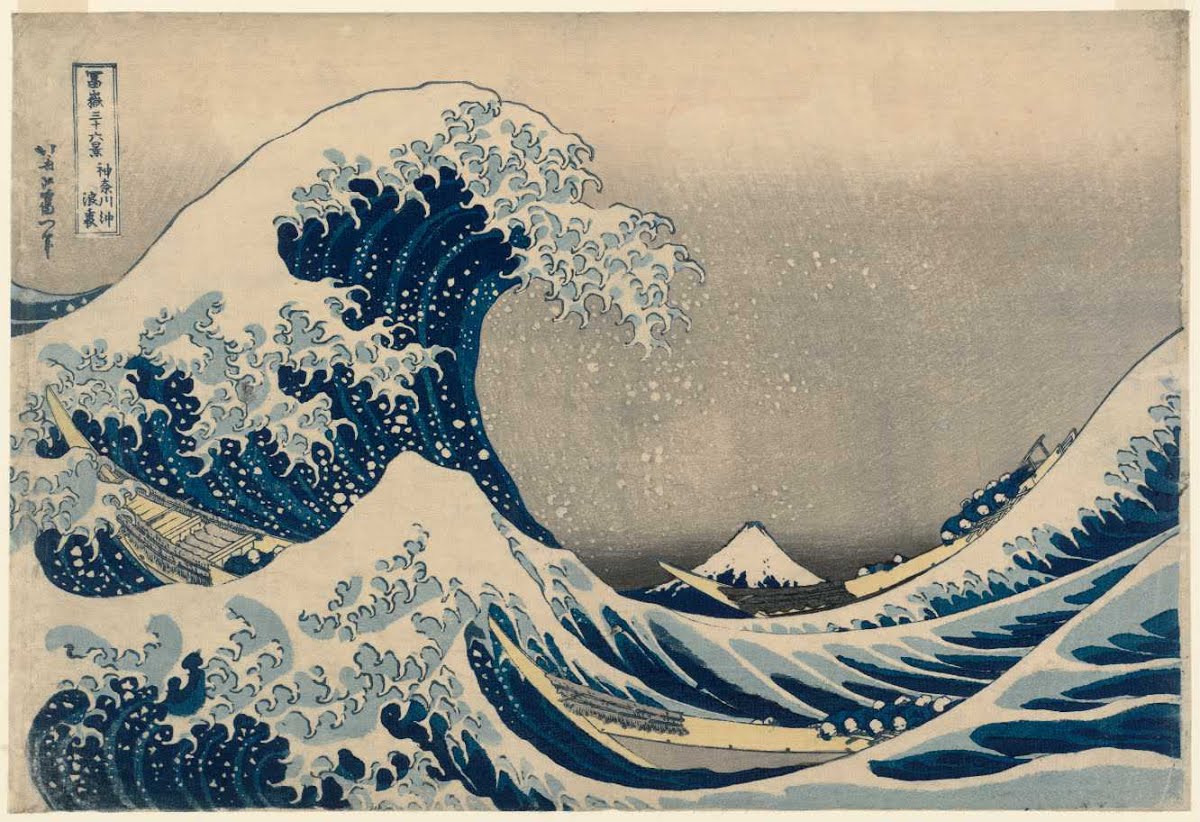
The popular Thirty-six Views of Mount Fuji series by Katsushika Hokusai was a strong influence on Hiroshige and are also included in this exhibition. Although Hokusai name may be foreign, many would notice some of the Mount Fuji scenes or The Great Wave that secured Hokusai’s fame both in Japan and overseas.

Suntory Museum of Art Tokyo Midtown
Tokyo Midtown Galleria 3fl, Akasaka 9-7-4, Minato-ku, Tokyo
10am-6pm (until 8pm on Fri, Sat). Closed Tue (unless Tue is public holiday)
Admission JPY 1,300