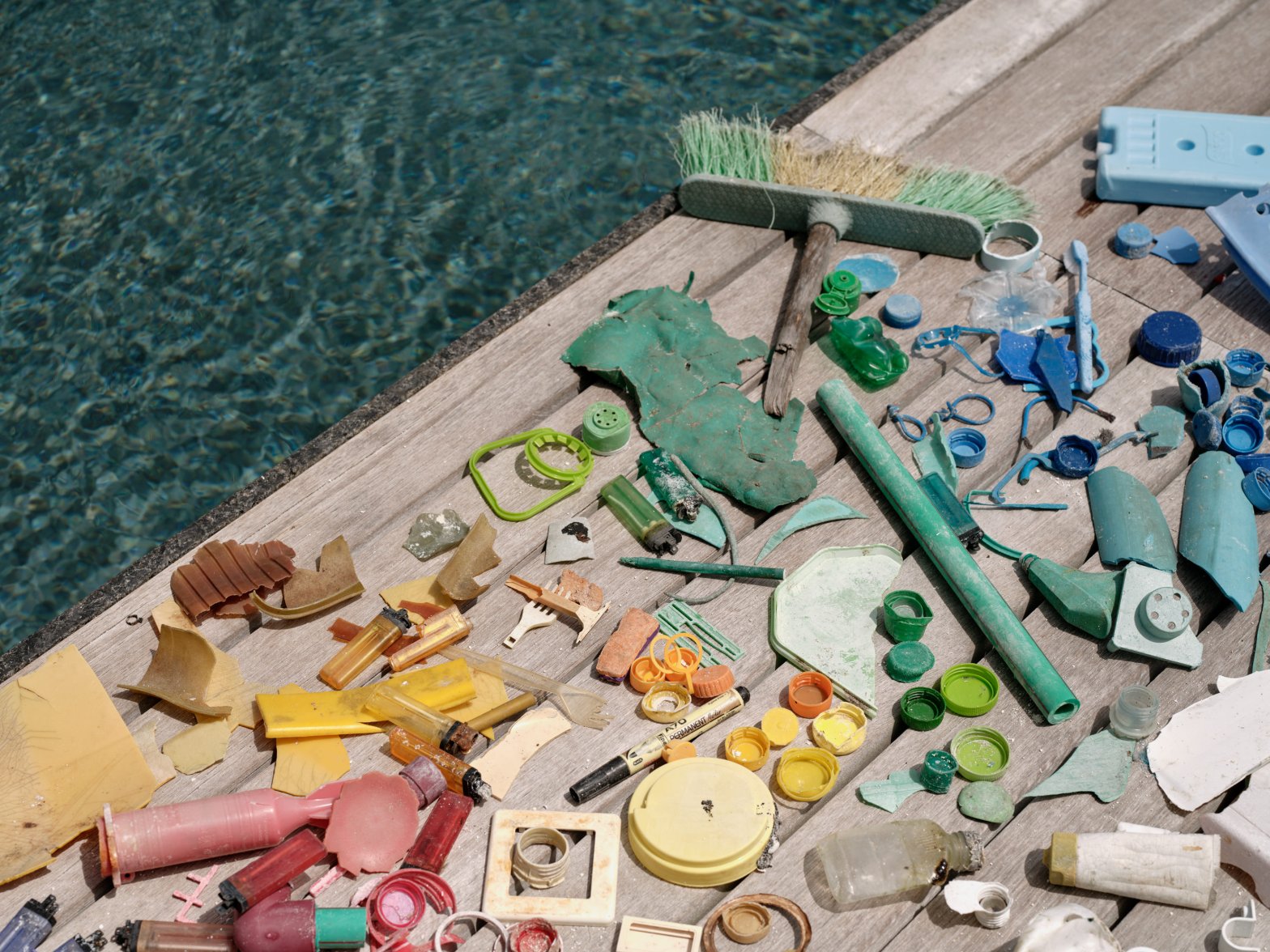
Normal is curating a series of experiential programming for Patina Hotels & Resorts throughout 2013. This fall, we are collaborating with the renowned artist Pamela Longobardi to unveil a large scale art called Ocean Archeology of Our Time in the upcoming multi-day program, Cosmopolitan Ocean.
Words: Jinou Park
A large scale, permanent art installation called Ocean Archaeology of Our Time by Pamela Longobardi will be unveiled during the event. Pam is Oceanic Society’s Artist-in-Nature, a Distinguished Professor at Georgia State University, and an internationally exhibiting and award-winning artist.
How can art become a monument in addressing the pressing issue of ocean plastics pollution? In an enlightening and impassioned conversation with Pamela Longobardi, renowned artist and environmental activist, we sat down and delved into her unwavering commitment to truth-telling, unique artistic approach and her profound connection to the ocean. The conversation has been edited for length and clarity.

Tell us about your journey as an artist and how you became passionate about environmental issues. Why did you specifically choose ocean plastics as your subject matter?
I was born into the age of plastics, influenced by my father, a biochemist at Union Carbide, a pioneering plastics manufacturer. He would bring home what he was working on in the lab. Shortly after that, I started to see plastics replace glass bottles and everything else. Initially (plastics) were useful and seemingly harmless but (the industry) eventually turned into a profit-driven scheme, much like tobacco companies hiding the effects of their products. This massive experiment is deleterious to human and the planet health. I’m super concerned about it.
Was there a particular moment when this concern began to shape your art?
My artistic trajectory took a turn when I stumbled upon vast mountains of plastic spewed out by the ocean on Big Island, Hawaii. I was at a particularly remote and uninhabited area but the piles of plastic were so deep, multi-colored, multi-shaped. I could stick my arm all the way to my shoulder but still could not reach the bottom. I was really struck in such a way that it completely changed my work. I started using plastics as a material.
What year was this? And were you already experimenting with plastics in your art at the time?
No, I was not. It was about 2005 and I was creating collages with devalued currency (laugh). However, the encounter sparked a creative dialogue between waste and value in my mind. I started seeing them as intricately linked – the countries with the most beautiful currency, with pictures of fanatic natural beings that we share the planet with, often had the least value. This disparity shed light on our skewed priorities and the lack of wealth equity.

Plastic pollution and environmental degradation issues are dominant topic of our time now but I wonder when it really entered our dialogue in such a pervasive way. In 2005, I wonder if it was a prevalent topic?
At the time, it felt like I was voicing my concerns in the wilderness. Gradually, the ocean seemed to call out to us, and simultaneously, more people began to awaken to the urgent need for action. Three to four years later, I had the privilege of collaborating with the newly formed Plastic Pollution Coalition in LA. They have now grown to become the largest and most influential global coalition, connecting individuals in the fight against plastic pollution.
That collaboration took me to the islands in Greece, rallying the community there to come together for beach cleanings and raising awareness on radio broadcasts. Over the years, we witnessed transformational change in isolated locations and that resulted in a 30-minute documentary capturing the impact. It gave me hope that we could indeed make a difference and that perhaps we can wake up in time. That’s my hope.
You are Oceanic Society’s Artist-in-Nature. Tell us about that.
After a few years working in Hawaii I started going out to other locations that were being impacted. Oceanic Society invited me to their expeditions and my role was that of a “plastics interpreter”. For instance we would be in Indonesia, I would collect plastics and bring them back on board to have discussions with other artists. To look at it forensically and decipher what was being told to us by the ocean through plastics as a communication tool. We created those plastic products so I think we have an innate understanding of them – as if there is an elementary language that bridges the vast complexity that is nature and human comprehension.
“we have an innate understanding of them – as if there is an elementary language that bridges the vast complexity that is nature and human comprehension.”
Pamela Longobardi
What about here at Patina and Cosmopolitan Ocean program? What are you ‘hearing’ from your encounters here?
I actually think the Cosmopolitan Ocean concept is important because acknowledges human presence in the oceans – the crucial first step in thinking about how we can play a positive role. Through my art, I feel like I’m making monuments to a pivotal moment in human evolution when we reached the brink in realisation. We came to understand that we are not alone in this planet but rather reliant on so many other fantastical fellow lifeforms. We are in a moment in time now to turn the ship in a different direction and I want to be part of making that visible to everyone.
I appreciate coming to a place like Patina that is already doing a really good job with plastics impact. I don’t think I’ve touched a single piece of plastic since I came here. Drinking out of ceramic mugs, using cloth napkins and even wooden room keys! It reminds people that we don’t need plastics and there are ways to live without it. Once people return from that experience, I think they will be inspired and want to change. We have to gather the moral and political will.

On the idea of creating monuments to witness problems of our time, that’s very fascinating and I can see there’s genuine purpose in that for you. How did that idea come to you? Were there inspirations along the way?
I think artists always do that. When you see something, you have this innate desire to show it to others through your art. That’s how I feel about the plastics issue. It wasn’t something people were talking about for decades, but when I saw it first-hand, I couldn’t ignore it. Over time, I began to see all the interconnectedness, even through my father’s early work. It’s like I was born into this mission.
Walk us through your creative process?
I always been inspired by the simple, orderly view of the world that Mondrian had. In particular, his series called Pier and Ocean where he was able to distil his vision of the natural world down to verticals and horizontals – that being the pier and the ocean, human and landscape. When I tackle such overwhelming subject matter like ocean plastics, I need to scale it down to something manageable for both myself and the viewers. The materials I use carry a weight of their own, having been shaped by countless natural forces and beings, not mere empty shells of their original forms.
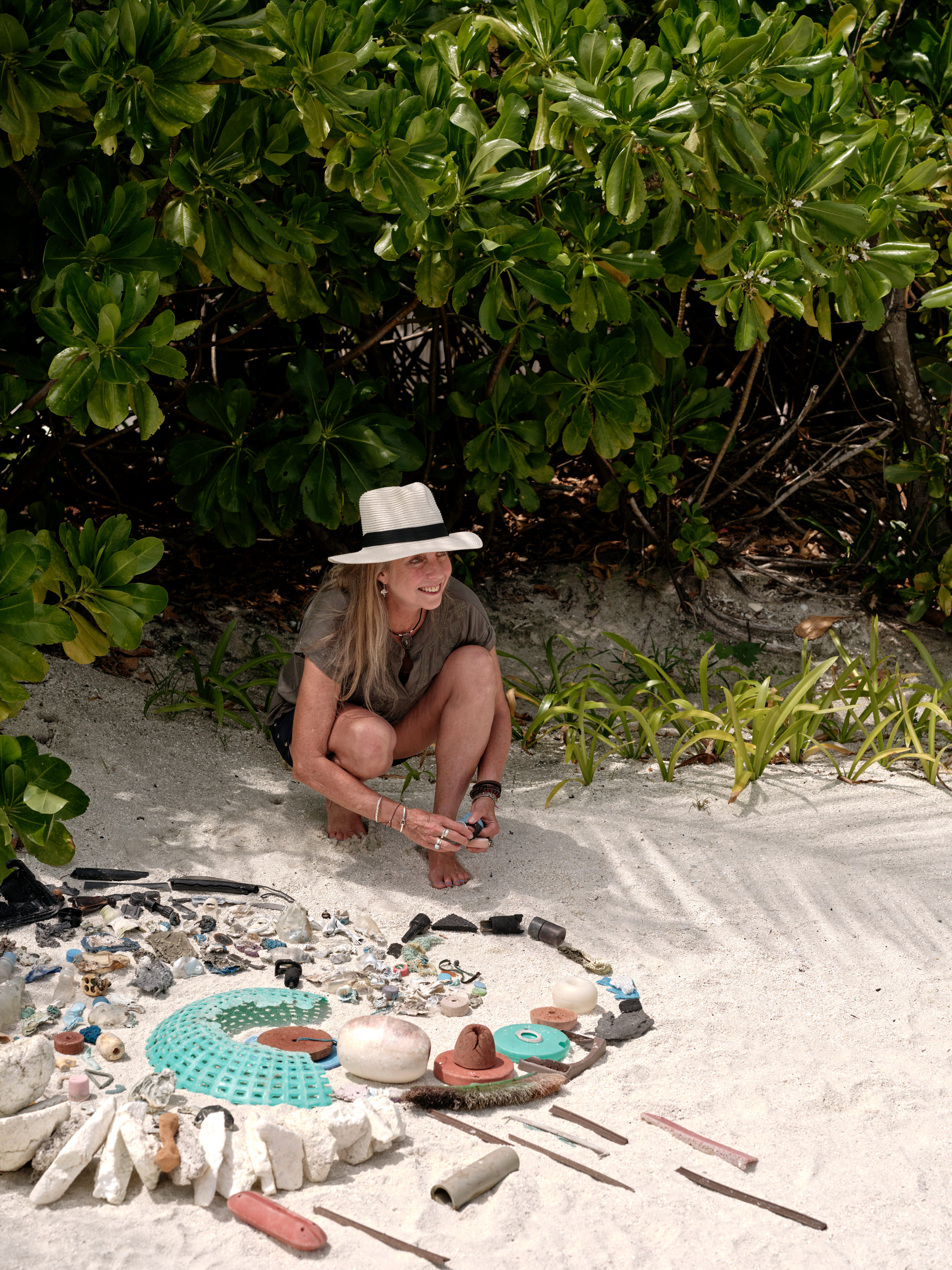
That’s where I start – bringing order to complexity. We lay everything out on the floor, rearranging it countless times until it conveys the desired message. I go into this elaborate process of mapping the entire arrangement, assigning each object a number, sector and shape on a map. This enables me to install them on a wall, attaching them as permanent objects or securing them with specimen pins.
Beauty becomes my greatest weapon. I really don’t think I can get people to look at this material if I were to present it in the state we find it. By organizing and setting order to the pieces, it appears attractive at first glance, but soon reveals the true darkness within. For me, beauty is not just saccharine prettiness; it holds complexity. The slow reveal of the visual experience allows for a gradual awakening, as viewers start to unravel the material’s origins and the homes it invaded.

What do you hope to achieve through your art and activism at Cosmopolitan Ocean? Any particular expectations or wish how your art would resonate with us?
I think this project gives us a chance to confront the material legacy that we are leaving behind – the archaeology of our time. What do we want that legacy to be? Surely, none of us would choose to leave behind something damaging and toxic. The truth about recycling has been concealed from us through misleading information, but now we know (recycling) is broken. Plastics producers devised this smokescreen to encourage consumption and assuage our guilt. My work is political; I stand for the truth, exposing the reality of our investment in petrochemical waste.
We have a choice. As more people demand change, expressing their rejection of single-use and disposable culture, producers will listen. A collective revolt is what it will take; that gives me hope.
“When I tackle such overwhelming subject matter like ocean plastics, I need to scale it down to something manageable… for both myself and the viewers.”
Pamela Longobardi
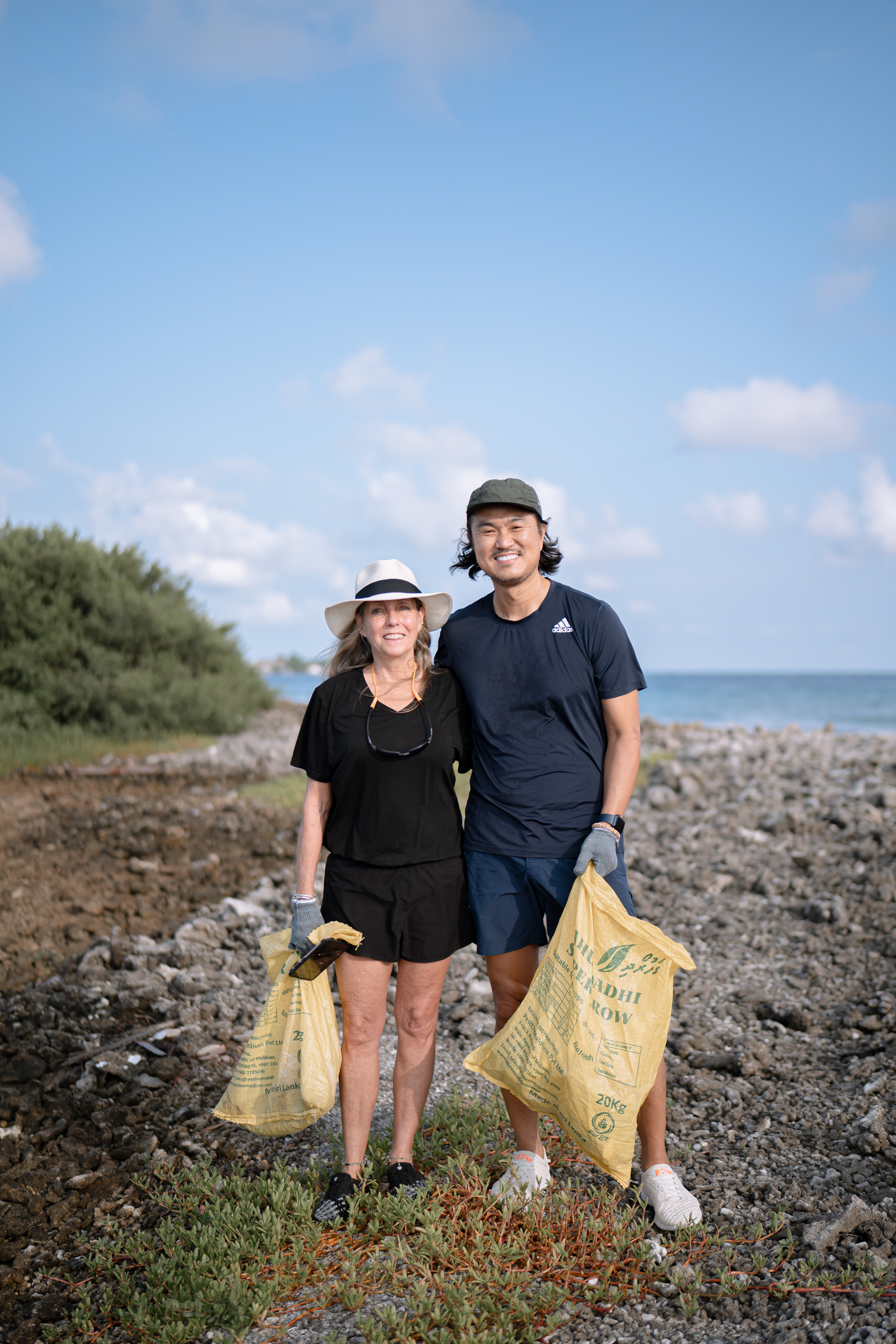
Morning after unveiling of Ocean Archeology of Our Time.
Cosmopolitan Ocean invites artists, healers, and entertainers to reimagine a festival, building a metaphorical bridge between the globalised communities of today and ancient Indian Ocean. A four-day festival of arts, music and new knowledge celebrate the legacy and future of oceanic cosmopolitanism will be held.
Find Pamela Longobardi at Patina Maldives, Fari Islands in Cosmopolitan Ocean on October 26 to 29, 2023.
 Normal .